




Table of Contents
Introduction to How I Search for Jobs In the Age of AI
Here’s the origin story of how I search for jobs in the age of AI. Some months ago, I spent entire mornings writing and rewriting a cover letter that ultimately, no one ever read. The application rejections came faster than my cooling cups of tea.
That was the day I realized I wasn’t really applying for jobs; I was feeding an algorithm. Every keyword, bullet point, and automated “thank you for your interest” message felt like proof that the process had quietly stopped being personal.
Finding work has always been part hope, part strategy, and lately, part algorithm. The job hunt has changed so much that some days it feels like you’re applying to robots about working with robots. Between automated screening systems, keyword-scanning résumés, and AI-generated cover letters, the process can feel less like connection and more like calibration.
As Harvard Business Review explains, AI now influences nearly every stage of hiring, from how applications are filtered to how candidates are ranked.
After a few frustrating rounds of digital silence, I decided to stop chasing listings and start learning how to search for jobs more intentionally. What I discovered made the entire experience less mechanical and far more human.
1. I Search for Alignment, Not Just Openings
The first shift was internal. Instead of asking who’s hiring, I began asking about who is doing work I actually respect.
That question led me down different paths — company blogs, LinkedIn updates, even podcast interviews. I learned that curiosity is a better compass than desperation, and it leads you to places algorithms haven’t mapped yet.
I started creating a simple spreadsheet listing job titles, people, and projects I was interested to learn from. Suddenly, the search became less about rejection and more about resonance.
2. I Use Tools, But I Don’t Let Them Think for Me
Yes, I still use Indeed and LinkedIn filters, but I treat them like search lenses, not oracles.
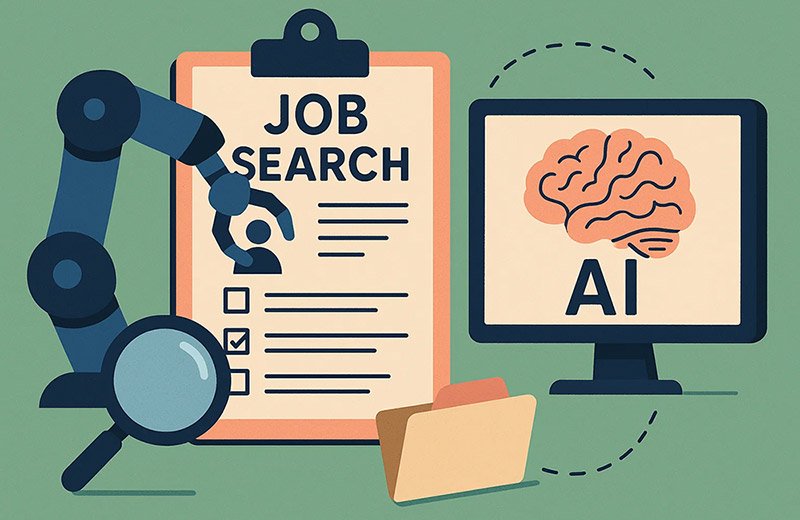
AI résumé tools and keyword checkers can be helpful, but only after you understand the human story you’re trying to tell. Automation can’t replace self-awareness; it just amplifies what’s already there.
If you don’t know what matters to you, no amount of optimization will make your profile feel authentic. The algorithms may filter for skills, but people still hire for substance.
3. I Read Job Descriptions Like a Linguist
Most job listings are written for systems, not for people. Once you know that, you start reading differently.
I look for tone, repetition, and what’s missing. If every other word is “fast-paced,” I know what kind of culture that is. If the description lists “resilience” three times, it’s probably code for “overwork.”
Reading carefully is crucial for survival. Language always tells the truth, even when the listing doesn’t lay it all out.
4. I Search Laterally
When job boards run dry, I look sideways to professional communities, alumni networks, niche Discord servers, Slack groups, and newsletters.
Sometimes the best job opportunities never appear on public boards; instead, they circulate quietly, through trust and reputation.
I also make a habit of reaching out to people without asking for anything. A short message of appreciation to someone whose work I admire has opened more doors than any “networking” event ever could.
The more human your network, the less you need to outsmart the machine.
5. I Track Meaning, Not Metrics
A rejection still stings. But now I keep a different spreadsheet not only of applications sent, but also of people, practiced skills, and inspiring ideas.
It reminds me that a search isn’t a scoreboard; it’s a process of becoming visible to the right kind of work.
I also revisit old applications months later, not to dwell, but to see how my thinking has evolved. That quiet reflection is its own kind of career growth — the kind that no algorithm can measure.
Why This Matters
The future of job hunting lies in a balance between automation and human intuition.
We can use AI to refine our résumés, but only curiosity and empathy will land us in the right rooms. The question isn’t just how we search for jobs, but what kind of person we become while searching.
Because every search for work, meaning, or direction is really a lesson in awareness that teaches patience when results don’t come quickly, discernment when too many options appear, and humility when we realize that luck still plays a part.
The tools will keep changing, but attention remains timeless. Learning how to search for jobs with focus, kindness, and curiosity, might be the most employable habit of all.
External Job Information Sources
- Harvard Business Review. “How to Get Hired When AI Does the Screening.” February 2025.
Explores how artificial intelligence now influences résumé filtering, ranking, and hiring decisions. - World Economic Forum. “The Future of Jobs Report 2023.”
Analyzes how automation and new technologies are reshaping global employment and skills demand.