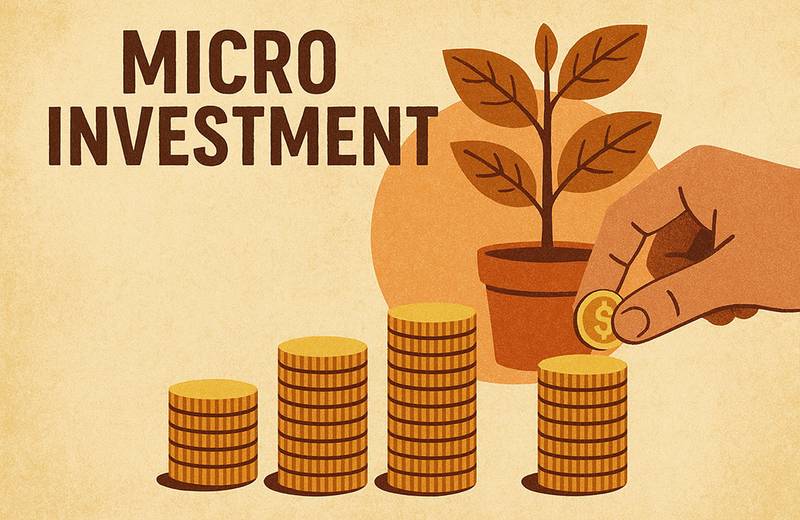




We all know money makes the world go round, but who understands how to handle it for the long run? That is the sticky part for most people. Your paychecks may be okay right now, but without a plan for your eventual future, that money can slip through your fingers like sand on a windy beach. Long-term financial planning is not about getting rich overnight or finding some magical investment formula. It’s designing a sensible, bite-by-bite plan that allows you to accrue wealth slowly but surely and safeguard what you already have.
Consider long-term financial planning like building a house. You wouldn’t begin with the roof, would you? There would have to be a base first, walls second, all the rest later. The same goes for your money. So whether you’ve just graduated college or you’re starting your first real job, or getting a handle on your finances after years of winging it, we’ll take you through the things you need to know. No confusing financial jargon, no complicated formulas — just clear advice that works in the real world.
Why Tomorrow You Will Thank Yourself for Starting Today
Let’s get real for a second. More time is spent planning the next vacation than financial future. They’ll spend more time researching hotels and comparing flight prices, and read dozens of reviews before booking a vacation than they will thinking about retirement or their path to wealth — rather dumping it all off to “someday.” Here’s the thing: Nobody ever has someday, and the clock is always ticking.
When you start your long-term planning early, you have something incredibly powerful — time. This is when you put the money to work and let it grow for 40 years until you retire at 65 if people stay on their traditional retirement ages. Wait until you’re 45, and that same money has only 20 years to grow. It’s not just 20 years of difference; in a world where compounding interest — essentially, money making money and then that money making more money — exists, it could be hundreds of thousands of dollars of difference.
Beyond the data, a financial plan provides peace of mind. You’ll sleep better at night, knowing you’ve got an emergency fund when your car craps out. You will make big decisions, like buying a house or switching careers, without worrying that you might have overlooked something. Financial stress is one of the greatest fears most people are feeling today, and a robust plan is your best antidote.
Laying Your Financial Foundation: The First Brick
You’ve decided to make a change. But long before you start thinking about investments or retirement accounts, the first thing you have to do is get your basic finances in order. This is your basement, the concrete slab upon which everything else rests.
Assess Where You Are Right Now
Whether you grab a notebook or open up a spreadsheet, write down everything you have — and everything you owe. Include your checking account balance, savings, credit card debts, student loans and car payments — everything. If your finances are a mess, this could leave you feeling exposed, but you can’t fix what you can’t measure. Total up all your assets (what you own) and all your liabilities (what you owe). The difference is your net worth, and monitoring that number over time tells you if you’re going forward or back.
Establish a Budget You Can Stick To
Budgets often get a bad rap — the perception is that managing your money involves restricting yourself, saying “no” to everything fun. Wrong. A healthy budget is really a plan for your money which makes certain your priorities are taken care of first. Start by recording every expense for a month — and I mean everything, from your mortgage to that $4 coffee.
Categorize your expenses in three buckets: needs (rent, groceries, utilities), wants (dining out, subscriptions, hobbies) and savings (emergency fund, retirement, goals). The 50/30/20 rule is a commonly recommended guideline — in which 50% of your after-tax money goes toward needs, 30% to wants and 20% to savings. Customize these percentages, but be sure saving gets its due before you spend on wants.
Take Down High-Interest Debt as If Your Life Depends on It
If you have credit card debt, especially at 18% or 24% interest, this should be your top priority after amassing a small starter emergency fund. Why? Because there isn’t an investment that’s going to consistently beat those rates of interest. You’re essentially lighting money on fire every month by maintaining high-interest debt.
Apply the debt avalanche method (pay off debts with the highest interest rates first) or the debt snowball method (pay off smaller loans first so you get psychological wins). Both are effective; choose the one that sustains your motivation. Throw all the extra dollars you can find at these debts while paying minimums on everything else.
The Safety Net All of Us Need
After paying down high-interest debt, your next task is to build an emergency fund. This is money that is earmarked specifically for unexpected expenses — medical bills, car repairs, job loss or anything else life throws at you.
How Much Cash Should I Keep in Reserve?
Three to six months’ worth of living expenses is the amount that personal finance experts will suggest that you save. If you spend $3,000 per month on rent and groceries — and still want to maintain a similar lifestyle if you became unemployed overnight — then your reserve fund should fall somewhere between $9,000 and $18,000. If you have a secure job and relatively few dependents, three months may be sufficient. If you’re self-employed, have children living at home or have a job in a volatile industry, aim for six months or even longer.
Put this money in a high-yield savings account — it should earn some interest, but you’ll still be able to get to it if you need it. Don’t put your emergency fund into stocks or another asset where it could lose value precisely when you need it most.
When Is an Emergency a Real Emergency?
Your emergency fund is for actual emergencies, not “I really want that new phone” crisis. Loss of job, health emergencies, significant home or car repairs do qualify. Your concert tickets do not, nor does your holiday shopping, or upgrading laptops. Having boundaries ensures there is a safety net when you really need it.
Smart Ways to Save for Life’s Many Goals
Long-term financial planning involves keeping lots of balls in the air at once. You could be saving for retirement, a down payment on a house, your kids’ education and that dream vacation all at once. The trick is to keep your savings organized so that each of your goals has a separate plan.
Short-Term Goals (1-3 Years)
These things might include establishing an emergency fund, saving for a vacation, buying new furniture or putting together a wedding fund. Keep this money in savings accounts or money market accounts, where it is safe and accessible. This isn’t a big-returns game you’re playing here — just making sure the money’s waiting when you need it.
Medium-Term Goals (3-10 Years)
Think house down payment, launching a business or purchasing a new car with cash. Where those goals are concerned, you can take a tiny bit more risk because you have time to recover from the downdrafts of stock markets. You might want to put some of this money into a combination of stocks and bonds via a regular brokerage account. The farther out you can push your timeline, the more stocks you can include.
Long-Term Goals (10+ Years)
Retirement is the big one here, but you also may be saving for your kids’ college educations or preparing to embark on a second career late in life. This is where long-term financial planning gets a chance to strut. With decades in front of you, you can afford to ride out market volatility and reap the benefits of compound growth.
| Goal Timeframe | Recommended Savings Mechanisms | Risk Level |
|---|---|---|
| 0-1 Year | Checking account, high-yield savings | Very low |
| 1-3 Years | High-yield savings, money market | Low |
| 3-10 Years | Balanced investment portfolio (60/40 stocks to bonds) | Moderate |
| 10+ Years | Stock heavy portfolio (80/20 or 90/10 stocks to bonds) | Higher |
Retirement Planning: Your Paycheck From Your Future Self
Retiring can seem so far off when you are young, and yet retirement is at the center of long-term financial planning. Social Security may pay for some things, but it will not give you what you have now. You need your own nest egg.
Where Are You Supposed to Put Your Retirement Money?
For most, you should start with your employer-sponsored retirement accounts — such as 401(k)s or 403(b)s — which allow you to save pretax dollars, lowering your current tax bill while allowing your investment to grow tax free until retirement. What’s more, many employers will match your contributions up to a certain percentage — so that’s free money you’re walking away from if you’re not contributing enough to get the full match.
Open an Individual Retirement Account (I.R.A.) if your employer does not provide a retirement plan or after you have maxed out the 401(k). Traditional IRAs, which also enjoy tax-deductible contributions as do 401(k) plans, are more like them in design; Roth I.R.A.s are funded with after-tax money but allow you to withdraw everything free of taxes when you retire. For younger workers (like our readers under the age of 49), Roths in particular are powerful if you expect to be making more money, and paying higher taxes, later.
How Much Money Will You Actually Need in Retirement?
The rule of thumb often cited is that you will need roughly 80% of your pre-retirement income each year to maintain the lifestyle to which you’ve been accustomed. If you are currently working on $60,000 a year, expect to live on $48,000 in retirement. Multiply that by 25, and you have your goal for retirement savings, in this instance $1.2 million.
Sounds like a lot, right? But if you begin withdrawing $500 a month starting at age 25, while earning the average market return of 8%, you’d have roughly $1.4 million by the time you’re 65. Start at age 35 instead, and you would have to save $1,150 a month to reach the same target. That is why early start in long-term financial planning matters.
Want a step-by-step approach to managing your expenses better? 👉 Read more here.
Investment Basics That Won’t Make Your Head Spin
Investing can be a scary word, but it’s actually pretty easy once you get the hang of it. Simple, the task: put your money to work so that it grows faster than inflation takes a bite out of its value.
Stocks: Owning Pieces of Companies
When you purchase stock, you are purchasing a small slice of a company. When the company does well, your shares become more valuable. Stocks have traditionally delivered around 10 percent a year in returns on average over long stretches of time, despite bouncing all over the place from one year to the next. They are the growth engine of your portfolio but also bring short-term volatility.

Bonds for a Reliable Return of Investors’ Money
Bonds are basically IOUs. You lend money to a government or company, and that entity periodically pays you interest until it returns your investment. Bonds are more conservative than stocks but with lower returns — generally, 3-5% a year. They provide stability to your portfolio and soften the blow when the stock market crashes.
Index Funds: Your Lazy Investor’s Secret Weapon
Rather than attempting to choose winners (which even experts find challenging to do consistently), purchase index funds. These funds hold hundreds or thousands of stocks, so you get instant diversification. A total stock market index fund owns a small piece of almost every publicly held company in the United States. They’re cheap, basic and have a history of outperforming most actively managed funds over time.
For more detailed information about investing strategies, check out Investopedia’s comprehensive guide to investing.
Asset Allocation: The Right Mix for Your Age Profile
A rule of thumb is to subtract your age from 110, and that’s about the percentage you want in stocks. At 30, you would have 80% stocks and 20% bonds. At 60, you would move to a portfolio that has 50 percent stocks and 50 percent bonds. As you near retirement, you slowly shift your money out of volatile stocks and into safer bonds so that market crashes don’t decimate your nest egg when there isn’t time to recover.
Tax-Savvy Ways to Keep More of Your Money
Taxes are one of your largest lifetime expenses, but smart long-term financial planning can significantly minimize what you pay. This is not some sketchy loophole — it’s employing legal tools the government put in place to help incentivize specific behavior.
Maximize Tax-Advantaged Accounts
That dollar you contribute to a traditional 401(k) or IRA reduces your taxable income, and your overall tax bill, today. If you’re in the 22% tax bracket and contribute $10,000 to your 401(k), you save $2,200 in taxes for that year. That money compounds tax-free for decades, and you pay taxes only when you take it out in retirement (ideally at a lower rate).
Roth accounts turn this around — no tax break today, but tax-free growth and withdrawals forever. This is especially useful if you’re planning to be in a higher tax bracket later, or if rates increase (which seems probable based on the national debt).
Don’t Ignore Health Savings Accounts
You can contribute to a Health Savings Account (HSA) if you have a high-deductible health plan. This is the only account that offers triple tax benefits: Contributions are deductible, growth is tax-free and withdrawals for medical expenses are also tax free. Better yet, you can take out HSA money for any reason after age 65 and simply pay regular income tax (similar to a traditional I.R.A.), but still keep the option of taking tax-free withdrawals for medical expenses.
Tax-Loss Harvesting in Regular Accounts
In your taxable brokerage accounts, you can sell out of investments that have lost value to offset gains elsewhere — shrinking your tax bill in the process. That tactic, known as tax-loss harvesting, could save you thousands of dollars in taxes over time. Some of this will be done for you automatically by many robo-advisors.
Protecting What You’ve Built: Insurance and Estate Planning Basics
Long-range financial planning is not only about accumulating wealth — it’s also about protecting it. A single serious illness or accident without insurance can deplete years worth of savings in months.
Health Insurance: Non-Negotiable Protection
Health care bills are the No. 1 cause of bankruptcy in America. Don’t go without health insurance, even if you’re young and healthy. If you have it as a benefit from work, use it. If not, purchase a policy on the health care marketplace. Yes, premiums are high, but being uninsured and hospitalized can be pricier than the car you drive.
Life Insurance: If You Have Someone Depending on Your Income
If you’re fresh out of college with no kids and no debt, chances are, you don’t yet need life insurance. But once others are relying on your income — a spouse, children or aging parents — you need coverage. Term life insurance is inexpensive and simple: You pay a modest monthly premium, and if you die during the term (usually 20-30 years), your beneficiaries get a payout to replace your income.
Stay away from whole life or universal life insurance unless you have very complex estate planning requirements. These policies combine insurance with investing, and tend to be costly and confusing. For most people, purchasing cheap term insurance and investing the difference is a better financial move.
Disability Insurance: Protecting Your Paycheck
It’s more likely for you to become disabled than it is to die while in your working years, but disability insurance is typically dismissed by most people. If you can’t work for months or even years because of an illness or injury, disability insurance is designed to replace a portion of your wages. A lot of employers provide this, but if you are not one of them, think about buying an individual policy.
Estate Planning: It’s Not Just for the Wealthy
Estate planning may sound like something that’s only necessary for wealthy families, but it is useful for everyone to have certain basic documents in place. It’s even more important when you have considerable assets, a house, or children.
Essential Documents Everyone Needs
A will identifies who inherits your assets after you die and who will take care of your minor children. Without one, the state decides based on their formulas (which may not reflect your intentions). Draft a durable power of attorney (someone who can make financial decisions on your behalf if you become incapacitated) and a healthcare directive (someone empowered to make medical decisions for you) to accompany your will.
These papers need not be expensive. Some online services are able to generate legally valid documents for only a few hundred dollars, but more complicated estates may require guidance from an attorney.
Revising Your Plan as Circumstances Change
Your long-term financial planning is not the set-it-and-forget-it proposition we’d like it to be. Life happens, and your plan should change along with it.
Life Events That Warrant a Review of Your Plan
Marriage means merging finances and possibly updating beneficiaries. Kids are a huge driver of insurance needs and education savings goals. The purchase of a house shifts your cash flow and tax circumstances. Job changes, especially large salary jumps or cuts, necessitate budget and savings adjustments.
Career shifts, starting a business, divorce, an inheritance — all of these are moments that warrant revisiting and possibly tweaking your game plan. Create a reminder to check your finances at least annually or when big events in your life occur.
Rebalancing Your Investment Portfolio
Because individual investments grow at different rates, the asset allocation you have targeted gets out of whack. You might otherwise be content pounding the table for 80% stocks and 20% bonds, only to ride a great stock market year higher until you find yourself sitting on an 85% stock portfolio — which amounts to taking more risk than you intended. Rebalancing involves selling some stocks and buying bonds in order to return to your targeted mix. Repeat every year or two to keep yourself on course.
Ten Financial Mistakes to Avoid
Despite good intentions, however, many — if not most — individuals make predictable mistakes that thwart their long-term financial planning. Here’s what to watch out for:
Lifestyle Inflation: The Millionaire Next Door
With each raise you receive, your lifestyle inflates to fill your new income. Better apartment, nicer car, fancier restaurants — just like that: 30% more pay and the same amount saved (maybe even less). Fight lifestyle inflation by saving at least half of any raise before you increase your spending.
Trying to Time the Market
Study after study has found that little can be gained by jumping in and out of the market on the basis of predictions. Not even professional fund managers time the market with any consistency. Your best strategy? Keep investing regularly, whether the market is up or down — and don’t let any amount of dips keep you from your course. You know that time in the market beats timing the market, every single time.
Ignoring Fees and Expenses
The 1 percent annual fee may sound small, but that can cost you hundreds of thousands of dollars in lost returns over a 40-year investing period. Opt for low-cost index funds (you’ll want expense ratios below 0.20% here) and steer clear of financial advisors who are compensated by high percentages of your assets unless they help to add significant value. Every dollar you spend on fees is one dollar of compounding money you don’t have in the future.
All Your Eggs in One Basket
Whether you’re purchasing only your company’s stock, sinking everything into real estate or stuffing all of your money in a savings account, not diversifying is risky. Diversify your investments between asset classes, industries and geographic regions so you are safe from any single catastrophic event.
Long-Term Motivation: How to Keep Going for Years
Financial planning for the long term is a marathon, not a sprint. Here’s how to keep motivation when results take years:
Track Your Progress Visually
Numbers in a spreadsheet are dull. Make charts that map your net worth over time, graph your progress on debt payoff or get apps that actually plot the way to accomplishing some financial goal. As that line continues to grow, year after year, it is tangible evidence your work is working.
Celebrate Milestones
Hit your first $10,000 in savings? Paid off a credit card? Reached a retirement savings milestone? Reward yourself with small treats for achieving these victories. You’re instilling habits that will serve you well throughout your life, and a sense of progress keeps you involved.
Find Your Financial Why
Money is not the idea, it’s the means. What do you really want? Early retirement? Freedom to switch careers? Kids in college debt-free? Traveling the world? Remind yourself of your deeper motivations, particularly when it feels tough to save.
Frequently Asked Questions
What is a good amount of money to save each month for the long term?
Try to save at a minimum of 20 percent of your take-home pay, but even if saving that amount feels impossible, start with 10 percent. The key is consistency. Auto-transfer funds from checking to savings so that you don’t even see it and therefore can’t be tempted to spend it. And as your income grows, increase that percentage slowly.
If I still have student loan debt, should I start investing now?
It varies depending on your rates of interest. If your loans are above 6-7% or so (some might say higher than 5%), focus on aggressive paydown upon forming a small emergency fund. If your rates are lower (as many federal student loans are, ranging from 3% to 5%), contribute enough to your 401(k) to get any employer match and then divide extra money between loan payments and additional investing.
What’s the difference between a financial adviser and a robo-advisor?
A financial adviser is a person who develops individual financial plans and can deal with complex personal situations. They usually levy a fee of 1% on your assets each year, or assessments that are flat. Robo-advisors are automated services that create and manage investment portfolios for far lower fees (0.25% or less) than human advisers, based on your goals and risk tolerance. Simple: Use a robo-adviser to do the work for you. Elaborate estates, businesses or a special situation still require human advisers.
Can long-term financial planning help me retire early?
Absolutely. Early retirement will require much more aggressive savings—often 40-50% or more of income—but it’s completely attainable. The FIRE (Financial Independence, Retire Early) movement has shown that, by spending less than we earn, investing a substantial portion of our income in low-cost index funds and creating new passive income streams through rental properties or other type of real estate investment, it’s possible to retire in one’s 30s or 40s. You’ll want to save about 25-30 times your annual expenses, depending on when exactly you want to retire.
How can I educate my kids about long-term financial planning?
Start young with age-appropriate lessons. Give them allowances, and encourage saving for particular goals. Open custodial investment accounts and have them watch money grow over time. Involve older children in family budget conversations and demonstrate how you’re making financial decisions. The way they see money now will influence their financial futures.
What should I do with a windfall like an inheritance or bonus?
Before you buy anything, wait at least 30 days as emotions cool down. Then in this sequence: pay off high-interest debt, increase the emergency fund to the full six months, max out retirement account contributions for the year, invest the rest in a diversified portfolio and only then consider using some of it to enhance your lifestyle. When chance allows you to leap ahead in your finances, don’t squander it.
Your Next Steps Start Now
Long term financial planning isn’t rocket science, it just takes a measure of discipline and patience. You have just been given the road map, written from scratch by someone who did end up in that better place — a clear and easy path from wherever you are now, whatever your income or level of assets may be — to long-term financial happiness. The strategies in this guide are effective, but only if you practice them.
Start small if you need to. Select one action from this guide — make that budget, automate your retirement contributions or open a high-yield savings account — and get it done this week. Then add another habit the following month. Slowly and steadily, you will build what amounts to a financial system that is running almost on autopilot — growing while you are free to concentrate on your life.
Don’t forget that the optimal time to have started was ten years ago. And the second best time is today. And you, the future version of yourself who is comfortably retired or off on that dream trip or navigating an emergency without spitting fury all over the walls around you, will thank your present self for doing this work. Financial success has nothing to do with making millions or knowing all the secrets. It is about making smart, consistent choices over time and letting compound interest do the rest.
Seize control of your financial future today and you’ll be astounded at where it takes you tomorrow.