
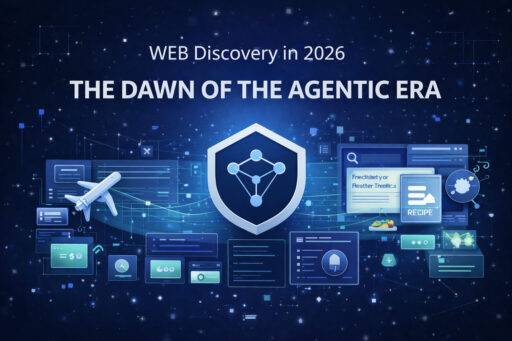

By 2026, the familiar search-and-click way of using the internet will be gone.
The era of blue links that once shaped the web has been replaced by a more personal, flexible, and powerful approach. Now, agent-driven discovery focuses on your intent rather than keywords, and on combining information rather than just navigating.
The web has changed from something you explore to something that works for you.
1. The Rise of Agentic Browsers and Personal AI
In 2026, the primary means by which people use the web is through agentic browsers rather than search engines.
These browsers do not wait for you to type a question. Instead, they figure out what you want to achieve.
These systems began as experiments in 2024 and 2025 but quickly improved when companies realized people preferred fewer decisions to more results. Early projects such as Google DeepMind’s Project Mariner paved the way by placing AI agents directly in browsers, enabling them to perceive, reason, and act.
In practice, this means agents can now:
- Access private data sources (cloud drives, notes, emails) to detect gaps in a task
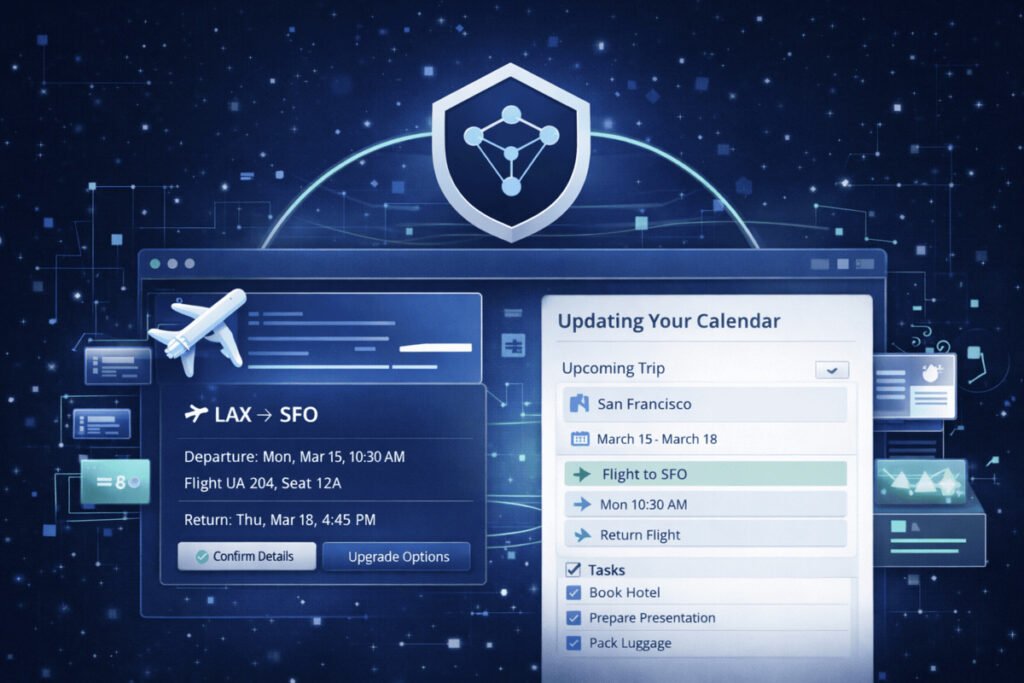
- Navigate third-party websites autonomously to book flights, reorder supplies, or complete workflows
- Deliver end-to-end synthesized outcomes rather than lists of links
Search bars are still available, but primarily as a legacy feature. Most interactions are now conversational, context-based, and ongoing.
This new kind of discovery feels smooth and effortless.
2. The Perceptive Interface: A Fluid Web
Static websites did not survive this change.
In 2026, discovery happens through a perception layer. It is a real-time system that adapts content based on your behavior, mood, device, and goals. Layouts change, images update, and content adjusts automatically.
Two people can visit the same web address and have entirely different experiences.
This perception layer has also sped up the growth of zero-click systems. More often, people do not visit websites directly. Instead, AI agents extract, summarize, and present answers immediately, often within tools such as ChatGPT or Perplexity, without revealing the original source.
For users, this appears advantageous, but for publishers, it is a significant challenge.
Discovery now happens in the background, so it is less about where you go and more about what you get.
3. From SEO to GEO: Optimization in the Agentic Age
Search Engine Optimization did not adapt, and it was left behind.
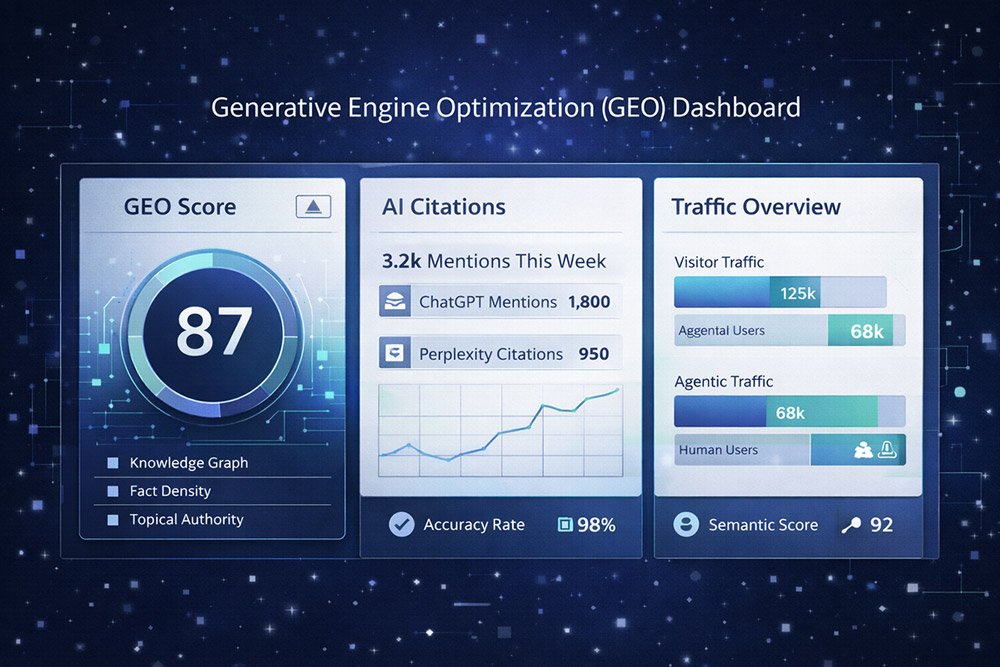
Instead, Generative Engine Optimization (GEO) and Answer Engine Optimization (AEO) took over. These focus on serving as trusted sources for AI, not merely ranking pages.
In 2026, brands prioritize being cited over ranking.
Winning in this environment requires:
- Machine-verifiable authority through structured knowledge graphs
- High fact density and semantic coverage, not bloated keyword scaffolding
- Clear entity definitions that AI models can resolve with confidence
Tools once used for SEO checks now have new applications. Platforms such as Clearscope and MarketMuse now assess the completeness of a topic, not just how frequently keywords appear.
Getting visitors is still essential, but having influence is even more valuable.
4. Technical Foundations: Talking to the Machines
In 2026, if machines cannot read your website, it is almost as if it does not exist.
Today’s web uses a semantic data layer, and JSON-LD is the primary means by which humans and agents communicate. Content is created once and then used in many unseen ways.
Core technical requirements now include:
- Schema-first publishing, using formats like FAQPage, HowTo, and Product to expose intent
- Entity clarity, reinforced through about, mentions, and sameAs relationships
- Explicit trust signals aligned with experience, expertise, authority, and trustworthiness
Voice technology has changed how creators make content. Since most homes now have several voice-activated devices, content is written for speaking rather than for quick reading. Features that make content easy to speak and natural language are now essential. The web now knows how to explain things clearly.
5. The Closed Border Response
Not everyone welcomed the move to agentic systems with open arms.
As AI-generated summaries drew attention away from publishers, sometimes cutting their traffic by 60 to 80 percent, many creators pushed back, leading to the closed border web.
High-value journalism, research, and niche expertise increasingly live behind:
- Subscription walls
- Authenticated APIs
- Explicit licensing agreements for AI access
The closed border has created a split internet:
- A public layer, optimized for agents and summaries
- A private layer, optimized for humans willing to pay for depth, nuance, and originality
Strangely, the closed border web has made truly human work more valuable again. Scarcity returned not because information disappeared, but because obtaining permission became important.
An Analogy for Understanding
The old web was like a vast library where you wandered aisles, pulled books, flipped pages, and hoped you were in the right section.
The web in 2026 is like having a personal researcher who has read every book, plus your notes, emails, and calendar. You say what you want once. The researcher provides a complete answer, cites sources, sets up follow-ups, and even handles the tasks you mentioned earlier.
The agentic era is about smarter delegation, not just faster searching. Once you try it, you will not want to go back.
Related: McKinsey & Company – The economic potential of generative AI